Jevons Paradox
In 1865, William Jevons outlined his observation about the phenomenon now called the Jevons Paradox. He was studying coal consumption in Britain and noticed something counterintuitive: as steam engines got more and more efficient, one would assume coal consumption would decrease, machines use less, so we need less. But the opposite happened. As engines got a lot cheaper to run, new use cases opened up, adoption exploded, and overall coal consumption paradoxically increased.
Put simply: the more efficient and cheap something becomes, the more of it we consume.
This mechanism has since been observed with LED lighting, car fuel, and cloud storage, in each case, as the cost per unit dropped, total consumption grew.
Why this matters today
Jevons Paradox is most likely going to be very relevant as AI continues to develop. Over the last 4 years, we have seen the cost of intelligence (LLM inference prices) drop 9x to 900x, depending on the task, due to better infrastructure and algorithmic improvements.
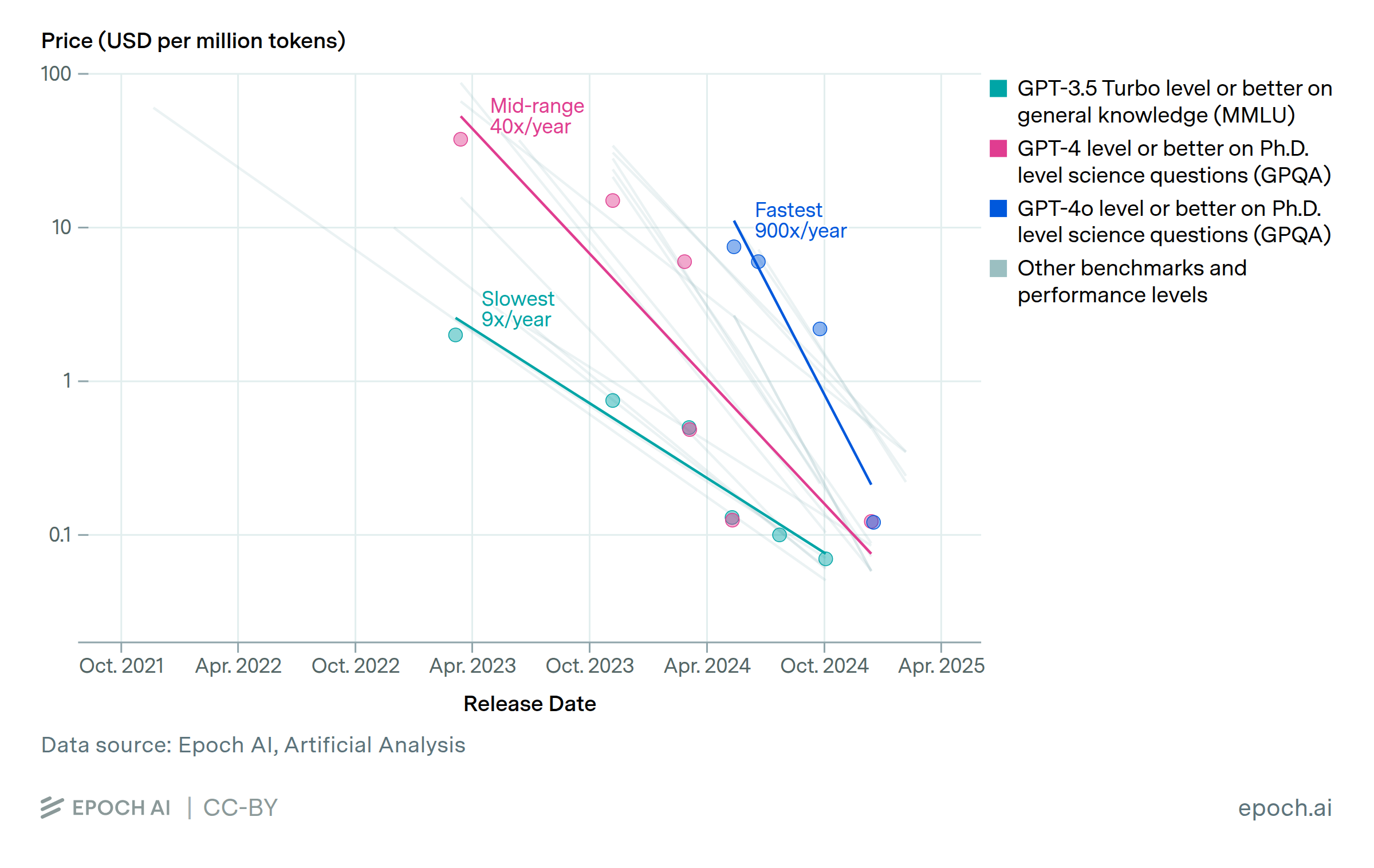
While the per-unit cost keeps falling, overall consumption keeps climbing. The chart below shows weekly token usage across OpenRouter alone, one of many inference providers, but it gives a good sense of how fast demand for tokens is growing.
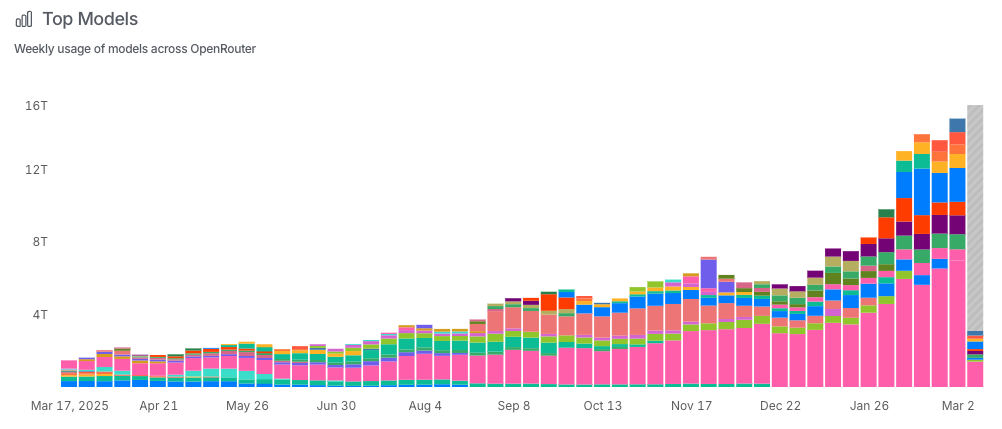
Assuming AI follows the Jevons Paradox, it's fair to predict that the market for intelligence (tokens) will keep expanding for quite some time.
Interesting questions
This raises some interesting questions.
How will it impact the SaaS industry? For years, software has been constrained by knowledge workers, particularly technical people. As AI makes that intelligence cheaper and more accessible, software prices will most likely fall. But because of the Jevons Paradox, the total addressable market will expand and more software will be built. Countless problems that were never worth solving at previous cost structures suddenly become viable. I believe that we will see a proliferation of niche software that would have been economically unthinkable just a few years ago.
How will it impact the need for energy? AI training and inference ultimately come down to energy. Already now, it's clear that the demand for energy will grow significantly and very quickly over the coming years. What is less obvious is how that energy will be delivered. Should it be up to the AI companies themselves? Or should it come through public utilities and the grid? And regardless of who provides it, how do we ensure that this rapidly growing demand is met by sustainable energy sources? Getting that right might be one of the most important challenges of the next decade.